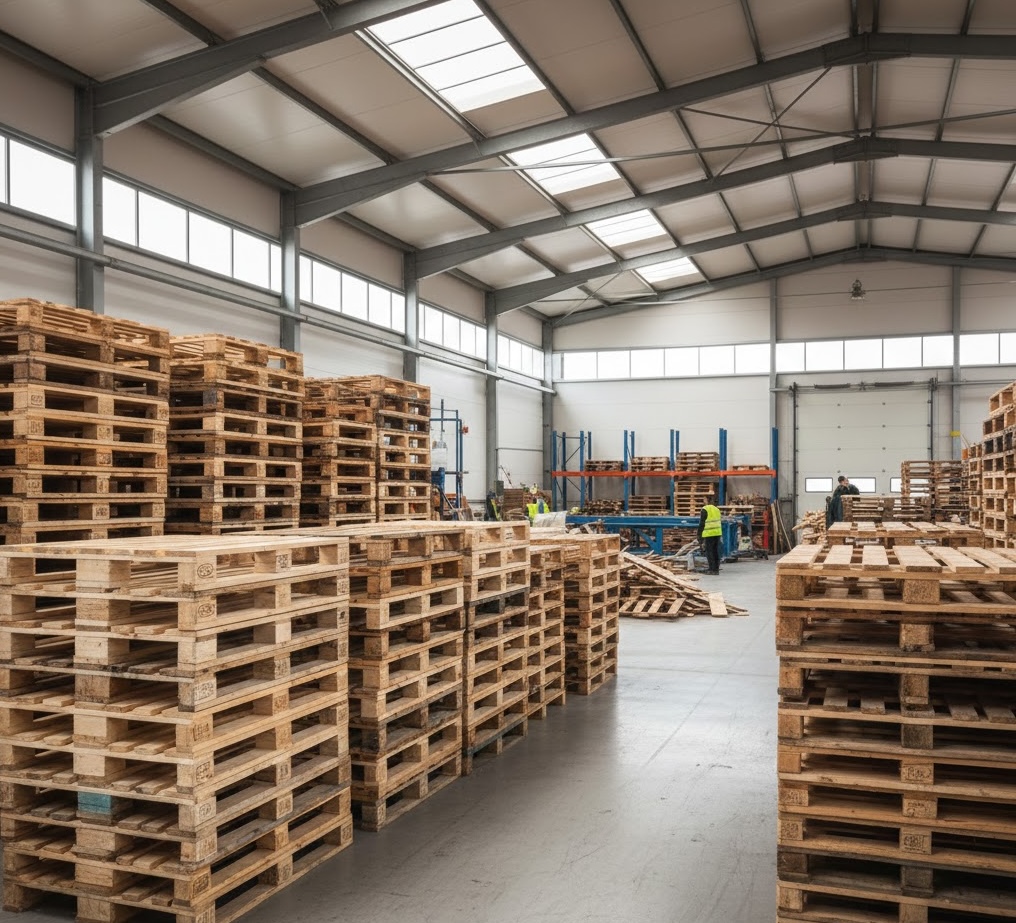
10+ standard sizes always in stock
Find Your Perfect Pallet Size
Not all pallets are created equal. Different industries have developed standard sizes optimized for their specific needs - from the ubiquitous 48x40 GMA pallet to specialized drum and automotive sizes.
This comprehensive guide covers everything you need to know about pallet dimensions, load capacities, entry types, and materials. Use it to make informed decisions about your pallet requirements.
North American Standard Pallet Sizes
These are the most commonly used pallet sizes in North America. The 48x40 GMA standard dominates the market, but each size serves specific industry needs. All sizes available from Nashville Pallets.
| Size | Name | Industry | Dynamic Load | Static Load | Racking Load | Entry | Market % |
|---|---|---|---|---|---|---|---|
| 48" x 40" | GMA / GroceryPopular | General / Retail / Grocery | 4,600 lbs | 7,500 lbs | 2,800 lbs | 4-Way | 35% |
| 42" x 42" | Telecommunications | Telecom / Paint / Chemicals | 3,500 lbs | 6,000 lbs | 2,200 lbs | 4-Way | 6% |
| 48" x 48" | Drum PalletPopular | Chemical / Oil & Gas / Drums | 4,000 lbs | 7,000 lbs | 2,500 lbs | 4-Way | 12% |
| 48" x 42" | Military | Military / Government | 4,000 lbs | 6,500 lbs | 2,400 lbs | 4-Way | 3% |
| 40" x 40" | Dairy | Dairy Products | 2,500 lbs | 5,000 lbs | 1,800 lbs | 4-Way | 5% |
| 48" x 36" | Beverage | Beverage / Bottling | 3,000 lbs | 5,500 lbs | 2,000 lbs | 4-Way | 7% |
| 36" x 36" | Small Square | General / Display / Retail | 2,000 lbs | 4,000 lbs | 1,500 lbs | 4-Way | 4% |
| 48" x 45" | Automotive | Automotive Manufacturing | 3,500 lbs | 6,500 lbs | 2,400 lbs | 4-Way | 5% |
| 44" x 44" | Chemical Square | Chemical / Agricultural | 3,200 lbs | 5,800 lbs | 2,100 lbs | 4-Way | 3% |
| 60" x 48" | Large / Oversized | Heavy Industry / Manufacturing | 5,500 lbs | 10,000 lbs | 3,500 lbs | 4-Way | 2% |
Detailed Size Information
GMA / Grocery
Most common size in North America. Fits standard warehouse racking and is the default choice for most applications.
Telecommunications
Square design ideal for round products, drums, and paint cans. Common in telecommunications industry.
Drum Pallet
Perfect for 55-gallon drums. Square shape maximizes stability for cylindrical containers.
Military
Standard for US military and government agencies. Required for many government contracts.
Dairy
Standard for dairy industry. Dimensions match standard milk crate configurations perfectly.
Beverage
Common in beverage industry for case goods. Narrower width optimizes truck space.
Types of Pallets
Understanding different pallet constructions helps you choose the right type for your needs.
Stringer Pallet
Most common type. Uses stringers (boards running lengthwise) to support the deck boards. Can be 2-way or partial 4-way entry.
- Most affordable
- Widely available
- Easy to repair
- Lighter weight
- Limited 4-way access
- May not fit all racking
- Less uniform strength
General shipping, warehousing, light to medium loads
Block Pallet
Uses blocks (typically 9) between the decks instead of stringers. Provides true 4-way entry for forks.
- True 4-way entry
- Stronger design
- Better for automation
- More uniform
- More expensive
- Harder to repair
- Heavier
- Less common in US
Heavy loads, automation systems, food/pharma, export
Double-Face Pallet
Has deck boards on both top and bottom surfaces. Can be reversible or non-reversible.
- Reversible option
- Better protection
- Increased stability
- Protects loads above
- Heavier
- More expensive
- Uses more wood
Heavy loads, stacking, protecting products from fork tines
Single-Face Pallet
Has deck boards only on the top surface. Bottom shows stringers or blocks.
- Lighter weight
- Lower cost
- Easier to handle
- Can't stack
- Less protection
- Fork tine visibility
Light loads, non-stacking applications, export (one-way)
Wing Pallet
Top deck boards extend beyond the stringers, creating "wings" for easier sling handling.
- Easier sling lifting
- More deck space
- Better for certain loads
- Wings can break
- May not fit standard racking
- More complex
Sling handling, oversized products, specialized operations
Solid Deck Pallet
Uses a single solid piece of material (plywood, OSB, or plastic) instead of boards.
- No gaps
- Easy to clean
- Better for small items
- Pest resistant (plastic)
- More expensive
- Heavier
- Harder to repair
Food industry, pharmaceuticals, small parts, clean rooms
Pallet Entry Types
Entry type determines how forklifts and pallet jacks can access the pallet.
4-Way Entry
Forklift and pallet jack can enter from all four sides. Most versatile and common for modern warehousing.
All forklifts and pallet jacks
- Maximum flexibility
- Easier loading/unloading
- Works with any racking orientation
2-Way Entry
Can only be entered from two opposite sides (front and back). Typically stronger but less flexible.
Forklifts only (from 2 sides)
- Stronger construction
- More stable for heavy loads
- Often less expensive
Partial 4-Way
Full forklift access from two sides, pallet jack (narrower) access from all four. Good compromise.
Forklifts (2 sides), Pallet jacks (4 sides)
- Balance of strength and flexibility
- Works with most operations
- Very common
International Pallet Sizes
If you're shipping internationally, you may need pallets that conform to regional standards. We can source or manufacture international sizes and provide ISPM 15 heat treatment for export compliance.
EUR Pallet (EURO 1)
Europe
Most common pallet in Europe. Managed by EPAL. Branded with EUR mark.
EUR2 Pallet (ISO)
Europe / ISO
ISO standard pallet used globally. Common in retail and manufacturing.
Asia Standard
Asia Pacific / Japan
Primary standard in Asia Pacific region. Square design for container efficiency.
Australian Standard
Australia / New Zealand
Common in Australia and New Zealand. Square design.
Australian/Dutch
Australia / Netherlands
Used in Australia and parts of Europe.
Chemical Pallet
Global (Chemical)
Used in chemical industry globally. Designed for drum handling.
ISPM 15 for Export
Most international shipments require ISPM 15 compliant pallets - heat treated to eliminate pests. Our heat treatment facility can certify any pallet for export.
- Core temperature of 56°C for 30 minutes
- Official IPPC stamp included
- Accepted in 180+ countries
Need International Sizes?
We can source Euro pallets, Asia-Pacific sizes, and other international specifications. Contact us with your requirements.
Request QuoteUnderstanding Load Capacities
Pallets have different load ratings depending on how they're being used. Choosing the right pallet requires understanding these specifications.
Static Load Capacity
Maximum weight capacity when the pallet is stationary and resting on a solid, flat surface with the load evenly distributed. This is the highest load rating.
- Pallet condition
- Load distribution
- Surface support
- Pallet grade
Dynamic Load Capacity
Maximum weight capacity during forklift handling, transport, or when being moved by pallet jack. Account for movement stress and impact.
- Handling speed
- Fork placement
- Operator skill
- Floor conditions
Racking Load Capacity
Maximum weight when the pallet is supported only at the ends, such as on warehouse racking beams. This is typically the lowest load rating.
- Beam span
- Load distribution
- Pallet condition
- Rack configuration
Deck Board Count
Number of boards on top and bottom decks. More boards = better load distribution but heavier pallet.
- Application needs
- Product type
- Load weight
- Forklift compatibility
Pallet Height
Total height from floor to top deck surface. Affects stacking capacity and warehouse clearance.
- Forklift clearance
- Stacking height
- Transport requirements
Pallet Weight (Empty)
Weight of empty pallet. Heavier pallets are typically stronger but add to shipping costs.
- Wood density
- Construction type
- Size
- Pallet grade
Pallet Wood Types
The type of wood affects pallet strength, weight, and cost.
Softwood (Pine/Spruce)
Most common pallet wood. Fast-growing, affordable, and widely available.
- Lower cost
- Readily available
- Lighter weight
- Easy to nail/repair
- Less durable
- Susceptible to moisture
- Lower strength-to-weight
General use, one-way shipping, light to medium loads
Hardwood (Oak/Maple)
Premium pallet material. Denser and stronger than softwood.
- Higher strength
- More durable
- Longer lifespan
- Better for heavy loads
- More expensive
- Heavier
- Harder to nail
- Slower to dry
Heavy loads, long-term use, export, reusable programs
Mixed Wood
Combination of softwood and hardwood components based on stress points.
- Optimized cost/strength
- Good balance
- Flexible sourcing
- Inconsistent appearance
- Variable quality
Cost-conscious applications needing good performance
How to Choose the Right Pallet
Ask yourself these questions to find the perfect pallet for your application.
What will you ship?
- Product weight (affects load capacity needed)
- Product dimensions (affects pallet size)
- Product sensitivity (affects pallet quality)
- Packaging type (boxes, drums, etc.)
How will pallets be handled?
- Forklift vs pallet jack (entry type)
- Automated vs manual (precision needed)
- Racking vs floor storage (load type)
- How many times will it be handled?
Where will pallets go?
- Domestic vs international (ISPM 15)
- Indoor vs outdoor (treatment needs)
- Single use vs returnable (quality/cost)
- Customer-facing or not (appearance)
What's your budget?
- New vs used pallets (cost)
- Grade requirements (A, B, C)
- Volume discounts available
- Total cost of ownership
Need Help Choosing the Right Pallet?
Our experts have 25+ years of experience helping businesses find the perfect pallet solutions. We'll recommend the right size, type, and grade for your needs.
Free consultation • Expert recommendations • All sizes in stock